10
10 Dec 31, 2025
Digital marketing has become one of the most powerful tools for communication, branding, and business growth in the modern era. As consumers increasingly rely on the internet to search for information, compare products, and make purchasing decisions, businesses must adapt to meet their audience where they already are online. In today’s digital-first world, having an online presence is no longer just about owning a website or social media page. It is about strategically using digital channels to attract the right audience, build trust, and convert interest into measurable results. From small startups and local businesses to global enterprises and personal brands, digital marketing enables growth without the limitations of geography or traditional media costs.
Individuals also use digital marketing to build careers as freelancers, consultants, creators, and entrepreneurs. Learning digital marketing opens doors to high-demand skills, remote opportunities, and scalable income streams.
Mastering digital marketing empowers you to understand audience behaviour, leverage data-driven strategies, and compete effectively in an increasingly crowded digital landscape.
What is Digital Marketing?
Digital marketing refers to the use of online platforms, technologies, and digital channels to promote products, services, or brands. These channels include search engines, websites, social media platforms, email, mobile applications, and digital advertising networks.
Unlike traditional marketing methods such as television ads, newspapers, or billboards, digital marketing allows businesses to communicate directly with their target audience in a more personalised and interactive manner. It also provides real-time insights into campaign performance, enabling quick optimisation and better return on investment.
Digital Marketing vs Traditional Marketing
Traditional marketing focuses on mass outreach with limited targeting and measurement capabilities. Digital marketing, on the other hand, offers:
Precise audience targeting
Two-way communication
Real-time performance tracking
Flexible budgets and scalability
Evolution of Digital Marketing
Digital marketing has undergone a remarkable transformation over the past few decades, evolving from simple online efforts into a highly sophisticated and multifaceted discipline. In its early days, digital marketing was limited to basic email campaigns, static websites, and banner ads. Businesses primarily used these tools to provide information and maintain a minimal online presence, with limited opportunities to measure engagement or conversions.
As technology advanced, digital marketing expanded into search engine optimisation (SEO) and search engine marketing (SEM). Brands began focusing on increasing their visibility on search engines, driving organic traffic, and targeting audiences more effectively. Display advertising and pay-per-click campaigns also emerged, allowing marketers to reach broader audiences while tracking results with greater precision.
The rise of social media platforms such as Facebook, Instagram, LinkedIn, and TikTok further transformed digital marketing. Brands could now engage directly with audiences, build communities, and create shareable content. Influencer marketing became a powerful way to leverage trusted personalities to authentically promote products.
Today, digital marketing is heavily data-driven and personalised. Automation tools, artificial intelligence, and advanced analytics enable marketers to deliver highly targeted campaigns, optimise strategies in real time, and create personalised customer journeys. This evolution has shifted marketing from a broad, one-way communication channel to a dynamic, interactive, and customer-centric experience, emphasising measurable results, engagement, and long-term brand loyalty.
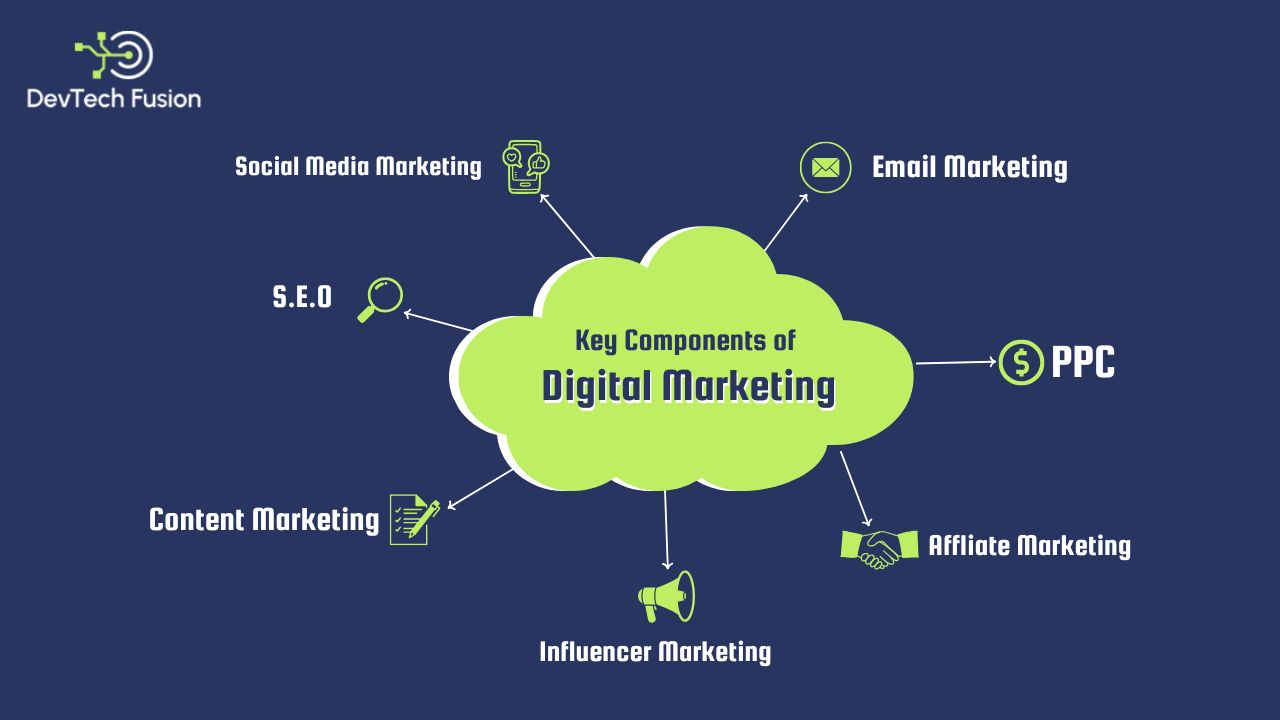
Key Components of Digital Marketing
Digital marketing is not a single strategy but a combination of multiple interconnected components. Each plays a crucial role in building a strong online presence.
Search Engine Optimisation (SEO)
Search Engine Optimisation focuses on improving a website’s visibility on search engines like Google. SEO involves keyword research, on-page optimisation, technical improvements, and link building to ensure that content ranks higher in search results.
A well-optimised website attracts organic traffic, increases credibility, and generates long-term results without continuous advertising spend.
Content Marketing
Content marketing is the foundation of digital marketing. It involves creating and distributing valuable, relevant, and informative content to attract, engage, and retain a clearly defined audience.
This content may include blog posts, articles, videos, case studies, whitepapers, and social media posts. The primary goal is to educate, solve problems, and establish trust rather than directly sell.
Social Media Marketing
Social media marketing uses platforms such as Facebook, Instagram, LinkedIn, TikTok, and X to promote brands, share content, and interact with audiences.
It enables businesses to humanize their brand, engage in real-time conversations, and build loyal communities. Social media also supports both organic growth and paid advertising strategies.
Email Marketing
Email marketing remains one of the most effective digital marketing channels. It allows businesses to nurture leads, maintain customer relationships, and drive repeat sales through personalized and targeted communication.
From newsletters and product updates to automated workflows and promotional campaigns, email marketing delivers consistent value when executed correctly.
Pay-Per-Click Advertising (PPC)
Pay-Per-Click advertising involves running paid ads on platforms like Google Ads and social media networks. Advertisers pay only when users click on their ads. PPC provides instant visibility, precise targeting, and full budget control, making it ideal for promotions, product launches, and lead generation.
Affiliate Marketing
Affiliate marketing involves partnering with third-party affiliates who promote products or services in exchange for a commission. This performance-based model helps businesses expand reach without upfront marketing costs. It is especially popular in e-commerce, software, and digital services industries.
Influencer Marketing
Influencer marketing leverages individuals with established audiences to promote brands authentically. Influencers help build trust, credibility, and awareness by recommending products to their followers. This strategy is highly effective on social media platforms where audience trust plays a major role in purchasing decisions.
Types of Digital Marketing
Benefits of Digital Marketing
Digital marketing offers several advantages that make it a preferred choice for modern businesses.
Cost-Effectiveness
Compared to traditional marketing, digital marketing allows businesses to achieve greater reach with lower budgets. Even small investments can generate measurable results when campaigns are optimized properly.
Global Reach
Digital platforms remove geographical barriers, enabling businesses to reach international audiences and expand beyond local markets.
Measurable Results
With tools like Google Analytics and CRM systems, marketers can track traffic, engagement, conversions, and ROI accurately.
Targeted Marketing
Digital marketing allows precise targeting based on demographics, interests, behavior, location, and intent, ensuring messages reach the most relevant audience.
Real-Time Interaction
Brands can communicate instantly with customers through comments, direct messages, reviews, and live chat, creating stronger relationships and trust.
Popular Digital Marketing Strategies for Beginners
Beginners should focus on building strong fundamentals before exploring advanced tactics.
Some effective beginner-friendly strategies include:
Starting a blog to share knowledge and improve search visibility
Optimising content with relevant keywords for SEO
Running small, controlled ad campaigns on Google or social media
Building a consistent social media presence on selected platforms
Creating simple email campaigns to nurture leads
Consistency, experimentation, and continuous learning are essential for long-term success in digital marketing.
Tools and Resources to Get Started
Using the right tools simplifies digital marketing efforts and improves efficiency.
SEO Tools
Google Keyword Planner
Yoast SEO
SEMrush
Social Media Tools
Buffer
Hootsuite
Canva
Email Marketing Tools
Mailchimp
Constant Contact
Analytics Tools
Google Analytics
HubSpot
Learning Resources
Google Digital Garage
HubSpot Academy
Meta Blueprint
These platforms provide free learning materials and certifications for beginners.
Challenges in Digital Marketing
While digital marketing offers many opportunities, beginners often face challenges such as:
Too many platforms and strategies to choose from
Constant changes in algorithms and trends
Difficulty producing consistent, engaging content
Understanding and analysing performance data
To overcome these challenges, it is important to start small, focus on one channel at a time, rely on data-driven decisions, and stay updated through continuous learning.
The Future of Digital Marketing
The future of digital marketing is evolving rapidly as technology advances and consumer expectations continue to change. Brands must adapt to smarter tools, new platforms, and personalised engagement methods to stay relevant, competitive, and impactful in an increasingly dynamic digital environment.
Artificial Intelligence (AI)
Enables smarter data analysis and customer behaviour prediction
Powers chatbots for instant customer support
Optimises ad targeting, content creation, and campaign performance
Helps deliver the right message to the right audience at the right time
Voice Search Optimisation
Growing use of smart assistants like Google Assistant, Alexa, and Siri
Shift toward conversational and question-based search queries
Increased importance of natural language keywords and local SEO
Marketing Automation
Automates repetitive tasks such as emails, follow-ups, and social scheduling
Improves efficiency and consistency across marketing campaigns
Allows marketers to focus more on strategy and creativity
Enhances lead nurturing and customer engagement
Personalization
Consumers expect tailored content and experiences
Personalised emails, ads, and product recommendations improve engagement
Data and AI help create more relevant and human-like interactions
Leads to higher conversion rates and customer loyalty
Short-Form Video Content
Dominance of platforms like TikTok, Instagram Reels, and YouTube Shorts
Preference for quick, engaging, and visually appealing content
Helps brands capture attention in a short time
Encourages authentic storytelling and creative expression
Looking Ahead
Digital marketing will continue to evolve with technology and consumer expectations
Adaptability and continuous learning will be essential for marketers
Innovation and customer-centric strategies will define long-term success
Brands that focus on value-driven, personalised experiences will thrive in the future digital landscape
Conclusion
Digital marketing plays a critical role in helping businesses and individuals grow in today’s competitive online environment. It provides flexibility, scalability, and measurable outcomes that traditional marketing cannot match.
The journey into digital marketing begins with taking action. Start with one strategy, analyse the results, refine your approach, and build momentum over time.
The digital world is vast, but with the right tools, knowledge, and consistency, anyone can build a strong and impactful online presence.
Ready to take the first step toward digital success? Your digital growth journey starts today.