


 5
5 Jun 12, 2026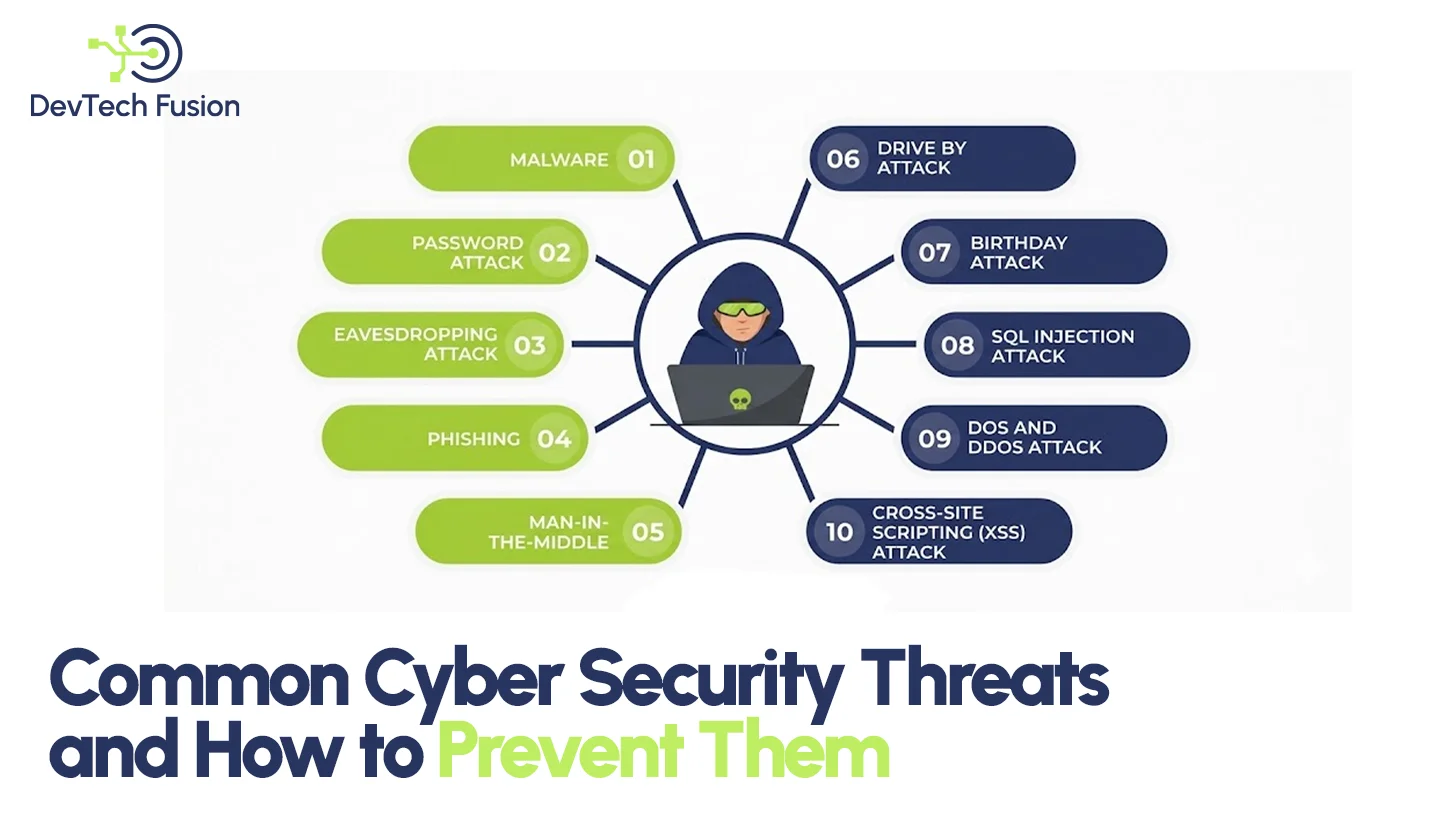
In an increasingly digital world, businesses and individuals rely heavily on technology to store data, communicate, and operate efficiently. While this digital transformation brings convenience and growth opportunities, it also exposes systems to evolving cyber risks. Cybersecurity has become a critical priority as cybercriminals continue to exploit vulnerabilities in networks, applications, and human behavior. From small businesses to large enterprises, no organization is immune to cyber threats.
Modern cyberattacks are more sophisticated, targeted, and damaging than ever before. A single breach can lead to financial loss, reputational damage, legal consequences, and loss of customer trust. With rising internet usage and cloud adoption, especially in developing digital economies, organizations must proactively understand potential threats and implement preventive measures.
This blog explores the most common Cyber Security threats faced by organizations today and provides practical strategies to prevent them. By understanding how these threats operate and how to defend against them, businesses can significantly reduce their risk and strengthen their overall digital resilience.
Understanding the Importance of Cyber Security
At its core, Cyber Security focuses on protecting systems, networks, and data from unauthorized access, attacks, and damage. It is not limited to installing antivirus software or firewalls; it involves a holistic approach that includes policies, technologies, employee awareness, and continuous monitoring.
As businesses increasingly rely on digital platforms for operations, payments, and customer engagement, cybercriminals view them as valuable targets. Weak passwords, outdated software, and lack of employee training often create entry points for attackers. Without a strong Cyber Security strategy, organizations risk data breaches that can disrupt operations and compromise sensitive information.
Effective security measures ensure business continuity, regulatory compliance, and customer confidence. In today’s threat landscape, investing in prevention is far more cost-effective than recovering from a cyber incident.
Malware Attacks
Malware is one of the most common and persistent threats in the digital environment. It refers to malicious software designed to infiltrate systems, steal data, or disrupt operations. Common types include viruses, worms, spyware, and Trojans.
Malware often spreads through email attachments, malicious downloads, or compromised websites. Once installed, it can monitor user activity, capture credentials, or grant attackers remote access to systems.
Prevention Measures:
Install reputable antivirus and endpoint protection software
Keep operating systems and applications updated
Avoid downloading files from untrusted sources
Train employees to recognize suspicious emails and links
Strong Cyber Security hygiene plays a vital role in reducing malware infections and limiting their impact.
Phishing and Social Engineering Attacks
Phishing attacks manipulate users into revealing sensitive information such as login credentials, credit card numbers, or company data. These attacks often appear as legitimate emails, messages, or websites impersonating trusted organizations.
Social engineering goes beyond emails; it exploits human psychology, trust, and urgency to bypass technical defences. Attackers may pose as executives, vendors, or IT staff to deceive employees.
Prevention Measures:
Conduct regular security awareness training
Use email filtering and anti-phishing tools
Implement multi-factor authentication (MFA)
Verify unusual requests through secondary channels
Human error remains one of the biggest vulnerabilities, making awareness a crucial part of any Cyber Security strategy.
Ransomware Attacks
Ransomware is a particularly destructive form of malware that encrypts data and demands payment for its release. These attacks can halt business operations entirely, causing significant downtime and financial loss.
Incidents related to ransomware attacks in Pakistan have increased in recent years, targeting healthcare, financial institutions, and small businesses. Many organizations lack proper backups or incident response plans, making them easy targets.
Prevention Measures:
Maintain regular offline and cloud backups
Restrict user access privileges
Patch systems and close known vulnerabilities
Deploy advanced threat detection solutions
A proactive Cyber Security posture can prevent ransomware infections or minimize their damage if an attack occurs.
Insider Threats
Not all threats come from external hackers. Insider threats involve employees, contractors, or partners who intentionally or unintentionally compromise security. This could include sharing passwords, mishandling data, or abusing access privileges.
Insider incidents are often difficult to detect because users already have authorized access to systems.
Prevention Measures:
Apply the principle of least privilege
Monitor user activity and access logs
Conduct background checks where appropriate
Establish clear security policies and consequences
Strong governance and monitoring are essential elements of effective Cyber Security management.
Weak Passwords and Credential Attacks
Poor password practices remain a major vulnerability for organizations. Attackers use brute force attacks, credential stuffing, and password spraying to gain unauthorized access to accounts.
Reusing passwords across multiple platforms increases the risk of widespread compromise.
Prevention Measures:
Enforce strong password policies
Use password managers
Implement multi-factor authentication
Monitor for suspicious login attempts
Password security is one of the simplest yet most critical defences in Cyber Security.
Unsecured Networks and Wi-Fi Risks
Public and unsecured Wi-Fi networks expose users to man-in-the-middle attacks, data interception, and unauthorized access. Remote work environments have further increased these risks.
Attackers can exploit unsecured networks to capture sensitive data or inject malicious traffic.
Prevention Measures:
Use VPNs for remote access
Secure Wi-Fi networks with strong encryption
Disable unused network services
Monitor network traffic continuously
Network protection is a foundational pillar of Cyber Security infrastructure.
Outdated Software and Unpatched Systems
Cybercriminals actively exploit known vulnerabilities in outdated software. Delayed updates and unsupported systems create easy entry points for attackers.
Many major breaches occur simply because patches were not applied on time.
Prevention Measures:
Implement a regular patch management process
Remove unsupported software
Automate updates where possible
Conduct vulnerability assessments
Keeping systems updated is a basic yet highly effective Cyber Security practice.

Cyber Security
Role of Professional Security Solutions
As threats grow more complex, many organizations turn to professional cybersecurity services to strengthen their defences. These services offer expertise, tools, and monitoring capabilities that are difficult to maintain in-house.
Managed security solutions provide continuous threat detection, incident response, compliance support, and risk assessments. Partnering with experienced providers helps businesses stay ahead of evolving threats.
In regions with growing digital adoption, working with the top cybersecurity companies in Pakistan enables organizations to address local threat patterns while meeting international security standards.
Building a Strong Cyber Security Strategy
Preventing cyber threats requires a layered and proactive approach. Technology alone is not enough; policies, people, and processes must work together.
Key elements of a strong strategy include:
Risk assessments and security audits
Employee awareness and training
Incident response planning
Continuous monitoring and improvement
A mature Cyber Security framework not only protects data but also supports long-term business growth and trust.
Importance of Employee Awareness and Training
One of the most overlooked aspects of cyber risk prevention is employee behavior. Even with advanced tools and security systems in place, human error remains a leading cause of breaches. Employees often unknowingly click malicious links, download infected files, or share sensitive information without proper verification.
Regular training programs help employees recognize suspicious activities, understand basic security best practices, and respond appropriately to potential threats. Awareness sessions should cover topics such as identifying phishing emails, using strong passwords, securing remote work environments, and reporting incidents promptly.
By fostering a security-first mindset across the organization, businesses reduce the likelihood of successful attacks and strengthen their overall defence posture. Well-trained teams act as an additional layer of protection rather than a vulnerability.
Incident Response and Recovery Planning
No security framework is complete without a well-defined incident response and recovery plan. Despite preventive measures, cyber incidents can still occur, and the speed of response often determines the extent of damage.
An effective incident response plan outlines clear steps for identifying, containing, and eliminating threats while minimizing operational disruption. It also defines roles and responsibilities, ensuring that teams act quickly and decisively during an incident.
Recovery planning focuses on restoring systems, recovering data, and resuming business operations with minimal downtime. Regular testing and updates of response plans ensure readiness and help organizations learn from past incidents, improving resilience over time.
Frequently Asked Questions (FAQ)
1. How often should businesses review their security policies? Security policies should be reviewed at least annually or whenever there are major changes in systems, regulations, or business operations.
2. Is antivirus software alone enough to stay protected? No. Antivirus software is only one layer of defence. A comprehensive approach includes firewalls, monitoring, employee training, and incident response planning.
3. What is the biggest mistake companies make regarding digital protection? Relying solely on technology while ignoring employee awareness and process improvement is a common and costly mistake.
4. How can small businesses protect themselves with limited budgets? Small businesses can focus on basic best practices such as regular updates, strong passwords, backups, and staff training to significantly reduce risks.
5. What should be done immediately after detecting a breach? Systems should be isolated, the incident assessed, stakeholders informed, and recovery procedures initiated according to the response plan.
Final Thoughts
Cyber threats are no longer a distant risk they are a daily reality for businesses of all sizes. Understanding common attack vectors and implementing preventive measures is essential to safeguarding digital assets. From malware and phishing to ransomware and insider threats, each risk requires a tailored defence strategy.
Investing in Cyber Security is not just about protection; it is about resilience, credibility, and sustainability in a digital-first world. Organizations that prioritize security today are far better positioned to adapt, grow, and compete tomorrow.
By staying informed, proactive, and prepared, businesses can significantly reduce their exposure to cyber risks and operate with confidence in an increasingly connected environment.